Friday, October 5, 2012

Utilization of logging residue or slash

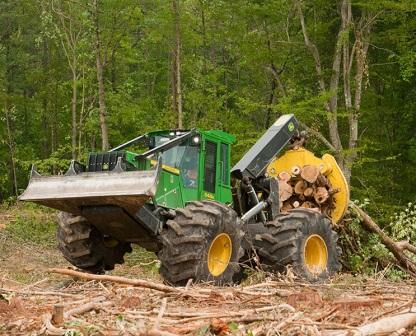
Not this Slash.  

Today I would like to take some time to focus on logging residue, also known as “slash”.    All too often when someone passes by a timber harvest, they see the slash scattered about the area and think to themselves, “Look at all that wasted wood”.  There is no need for concern here, for that wood has not been wasted at all.  When it comes to reducing overland flow and the erosion that occurs as a result, slash does an excellent job.  Due to the nature of the operation, slash is in abundance, so why not utilize a material that is already on site and in bulk?  In addition to reducing erosion, slash contributes nutrients to the soil.  As it decomposes, the nutrients in the slash are returned to the soil.  So not only are the nutrients that are already there retained instead of washing away, more nutrients are deposited!

It is especially important for slash to be distributed in highly sensitive areas, or areas that are the most erosion prone.  Woods roads or skid trails that are going to be closed following the operation should have slash distributed down them in such a manner to keep them from washing out.  This entails putting down the finer slash first and running over it with a skidder to get it down into the soil, followed by larger slash.  The amount of slash put out depends on how much potential there is for erosion, however, it’s pretty hard to overdo it. 

Skid trail stabilized with slash
Skid trail in a clearcut stabilized with slash
Another sensitive area that can benefit from distributing slash on it is the approaches for stream crossings.  The slash should be put down just as you would when closing down a woods road to hold the soil in place and keep it from entering the stream.  It is important to take note that the slash is put down on the approaches to the crossing, but not down in the stream bed itself.  If excessive slash is left in the stream bed, then those excess nutrients will end up in the stream as the slash decomposes, posing water quality risks.  Even worse, slash in the stream bed will eventually dam up the stream creating issues both up and downstream.  A common approach to crossing streams where low water crossings are not practical is to use a bundle of slash in the stream so that equipment can drive over it.  These crossings should be removed immediately as soon as operations are complete to prevent negative impacts to water quality. 

Stream Crossing approaches stabilized with slash

Other sensitive areas such as steep slopes or areas with highly erodible soils can benefit from slash distribution as well.  The slash will keep these areas from eroding until vegetation can re-establish itself and continue to keep the soil intact.  In most cases the slash has more or less decomposed at this point, and vegetation has taken over and erosion is still kept to a minimum.  


Friday, September 28, 2012

Texas NRCS Personnel Attend Forestry BMP Training


On Tuesday, September 25 in Jefferson, Texas and on Thursday, September 20 in Lufkin, Texas NRCS personnel attended training put on by TFS water resources staff to become more familiar with Texas Forestry Best Management Practices.  This was an opportunity for some to become newly acquainted with forestry BMPs and for others to be refreshed.  All aspects of the BMP program were covered in the morning session of the class to ensure that all those attending had been exposed to forestry BMPs as well as to facilitate discussion on some issues they might face in their jobs. 

After lunch, the classes visited recently harvested tracts to view these best management practices first hand.  At the field sites, the students were able to identify different stream types, view and discuss streamside management zones (SMZs), look at various stream crossing methods, view and discuss water control structures and other aspects of timber harvesting, and how BMPs are implemented in these activities.  The ultimate goal of these classes was for NRCS personnel to leave with a greater understanding of forestry BMPs to aid landowners in protecting soil and water resources.  

Thursday, September 6, 2012

September 2012 BMP Q&A

By: Todd Thomas, Water Resources Forester, Texas A&M Forest Service


Q: Sometimes in order to speed things up, our skidder operator will delimb logs using what is called “backing".  This is where he takes the logs with the skidder grapple and backs them into standing timber, knocking off the limbs before they get to the landing.  Recently I was told that this was not a good practice and that we should not do this anymore.  Are there any BMPs related to this, and why should we not do it?

A: Excellent question, and one that certainly needs to be addressed.  While there are no BMPs that specifically mention “backing", it is something that should not be practiced, especially if it is done in an area where the trees will not be completely harvested, as is the case of a Streamside Management Zone (SMZ).  Backing whole trees in for delimbing can cause excessive damage to the residual stand, making them more susceptible to insects and disease and possibly resulting in mortality.  This completely defeats the purpose of leaving them standing, and if in an SMZ, may not provide the same level of water resource protection. 

In addition to damaging trees, the nature of this process involves equipment intrusion into the SMZ.  If you recall, Texas Forestry BMPs call for equipment traffic to be kept to a minimum within the SMZ, as well as for the “forest floor to be essentially undisturbed".  By backing logs in, these BMP guidelines have not been followed.

Another way in which backing damages SMZ is the potential to create ruts at the edge of the SMZ.  Even if these ruts are small, they can become a direct channel to carry runoff water to the stream and increase erosion.  You can also push back too far, damaging the stream bank itself, and causing it to fail.  While you may have strived to follow BMPs across the entire tract, this simple process can negate the other BMPs by delivering soil directly to the stream. 

Texas Forestry BMPs call for streams to be “clear or debris, such as tops and limbs”.  While you may be pushing the limbs back at the edge of the SMZ, you run the risk of pushing them into the stream.  Even though tops and limbs can fall into the stream bed naturally from storms and dead trees, there is no need to increase this debris from a practice that is not necessary.  As these tips and limbs decompose, they release nutrients that can reduce water quality.  When stream flow increases during rainy weather, limbs and tops are pushed downstream and can dam up the stream, increasing the potential for flooding.  As the limbs are pushed down even further, they can gouge the stream banks, increasing the erosion that occurs naturally within the stream, as well as increasing the amount of soil in the water.

In conclusion, even though skidder operators are well intentioned and are just trying to help out the guys up at the landing, this is a practice that needs to go by the wayside.  It is not worth the damage that can be incurred to the SMZ or the stream, and I wonder about its’ efficiency to the overall operation.  Keep the questions coming so we can shed some light on any best management practice confusion that might be out there, you can send your questions to me at tthomas@tfs.tamu.edu or just phone it in by calling (936) 639-8180.


*This article was published in the September 2012 issue of the Texas Logger

Friday, August 31, 2012

The basics of waterbars and wing ditches

The primary pollutant that enters our waterways from forestry operations is sediment.  This sediment comes mostly from roads, skid trails, and firebreaks.  Sediment is carried from overland flow that has gained enough velocity to detach soil particles and carry them with it; this overland flow, if not slowed down and dispersed, ends up in the stream, sediment and all.  One method of slowing down overland flow, as well as dispersing any sediment that it is carrying with it is to construct waterbars in trails, roads, and firebreaks.


Waterbars should be constructed at a 30-45 degree angle, turning overland flow out and away from the road.  


Accompanying a waterbar should be some sort of a turnout, more commonly referred to as a "wing ditch."  As the overland flow is intercepted by the waterbar, it is diverted into the wing ditch and dispersed before it has the opportunity to gain speed and cause further erosion.  It is also important to note that wing ditches should be constructed to be more flat than v-shaped.  This encourages diverted flow to dissipate rather than be concentrated.  


When constructing waterbars it is important to be sure that both ends are tied in to the edge of the road.  This prevents "blow outs" or water from going around the waterbar.  


Waterbars should never be constructed perpendicular to the road, this forms a dam, causing water to stand in the road.  Even though any overland flow has been put to a stop, the integrity of the road has been compromised, due to the 90 degree waterbar with no turnout accompanying it.  


Waterbars and wing ditches should never discharge into streams.  This increases stream bank erosion as well as increases the amount of sediment that enters the stream as a result of operations.

Friday, August 24, 2012

Wealth of Information at Your Fingertips!

Forest landowners who want some information on various aspects of timberland ownership can go to the Texas Forest Service website.  For a concise collection of links to all kinds of information, go to the Water Resources web page - http://texasforestservice.tamu.edu/water -  and click on "Publications."  Scroll down until you find Forest Landowner Briefings.  The first edition covers a wide variety of topics pertinent to forest landowners.  Links are included so the viewer can delve more deeply into each topic.  The second edition, which was just published (August 2012), looks a little farther into more specific topics, including wildfire recovery, wildlife management, endangered species, forest taxes, and non-traditional income on forestlands.

These two newsletters were originally intended to be a resource for landowners with forested property in East Texas but living out of state.  However, any forest landowner can benefit from the information provided, especially new landowners who aren't sure where to start and what is available to them.  Take a look!


Photo by Ronald F. Billings, Texas Forest Service

Friday, August 17, 2012

Crushed Concrete on the Jones State Forest

While more expensive than seeding, armoring a road surface with rock is an excellent way to prevent erosion and improve access, especially on roads that remain wet for long periods of time, experience heavy traffic, or are prone to erosion.  A popular rock to use is crushed concrete.  When structures such as roads and buildings that are made of concrete are demolished, it has become common practice to take this concrete and crush it for reuse.  After the concrete has been crushed, magnets remove any steel such as rebar that may be present.  The final product is a hard, granular aggregate that is composed of sand, gravel, and crushed stone. 
Crushed concrete is often cheaper than using natural rock aggregate since it is a byproduct of demolition.  Crushed concrete stabilizes relatively quickly once it is applied to the road creating a firm road surface.  Just as with using other rock material for roads, crushed concrete drains faster than if the road was left with its natural dirt surface, reducing the potential for rutting in the road. 
This week, 118 tons of crushed concrete was spread out on a section of road in the Jones State Forest in Conroe, Texas by TFS Resource Specialists Mike Adams and Ray Uballe.  The section of road where the crushed concrete was distributed is just one stop on the best management practices (BMP) tour down on the Jones.  The tour consists of various BMPs that have been put into application so visitors can not only learn about these BMPs, they can also see them in use. 


 Resource Specialist Ray Uballe spreads the crushed concrete following the delivery of the material
 

Resource Specialist Mike Adams smoothes the newly applied crushed concrete


Monday, August 6, 2012

August 2012 BMP Q&A


By: Todd Thomas, BMP Forester, Texas Forest Service

Q: While discussing streamside management zones (SMZs) with a co-worker, the topic of thinning came up.  I told him that the guidelines recommend leaving at least 50 ft2 of basal area per acre.   He insisted that it was 50% crown cover.  Who is right?   Is there really a difference?

 A: Great question.  SMZs provide many critical functions in protecting water quality, so it is important that we don’t limit their effectiveness through over harvesting.  Not only do these areas slow and filter runoff, they also provide shade to streams, maintain bank stability, and lessen the impacts from raindrops that can lead to erosion. 

Now back to your question.  In essence, there is some truth to both answers, though in the event you have a friendly wager riding on this, I would have to side with you.  According to the Texas Forestry Best Management Practices Handbook, within the SMZ of perennial and intermittent streams, a minimum of 50 square feet of basal area per acre should be left.  The residual basal area should be evenly distributed throughout the SMZ in order to provide adequate protection to the stream. 

So what exactly is basal area?  This forestry term is primarily used as a measure of density and is defined as the cross sectional area of a tree stem in square feet at breast height (4.5 feet above the ground).  Since this can sometimes be a difficult concept for people to understand, especially those unfamiliar with forest measurements, the BMP handbook also includes a general rule of thumb that can be used.  Retaining 50% overstory crown cover within the SMZ can usually serve the same purpose, though in order to achieve this, you probably will have to leave a little more than half the trees in a forest that has reached canopy closure. 

Basal area, once you understand it, is very easy to measure, especially when you have the right tool.  A BAF 10 factor prism can quickly help you determine the residual density of the SMZ.  If you don’t have a prism, the BMP handbook includes a section on page 107 that provides information on how to calculate basal area. 

Remember, any time you are working in SMZs, special care is necessary in order to maintain their critical function.  While it is important to manage these areas, operators should continue to follow all related BMPs.  Roads and skid trails should be located outside of these areas when feasible and logging decks should be at least 50 feet from the edge of the SMZ.  Directional felling should also be used to minimize the amount of debris that enters the stream.  Logging slash that inadvertently enters the stream should be removed.  Lastly, minimize the number of bank trees that are harvested, as these help protect the integrity of the stream, provide shade, and stabilize the bank. 

Thanks for taking the time to increase your knowledge of BMPs and keep up the good work out there in the woods.  Also, please send in any BMP questions you may have, because chances are if you are unsure of something, there is someone else out there who has the same question.  Feel free to contact me at tthomas@tfs.tamu.edu or (936)-639-8180. 

*This article was published in the August 2012 issue of the Texas Logger